What follows is a short pictorial history of over 20 years of involvement and events concerning the land to the north and east of the Park Ecovillage Findhorn – the Findhorn Hinterland.
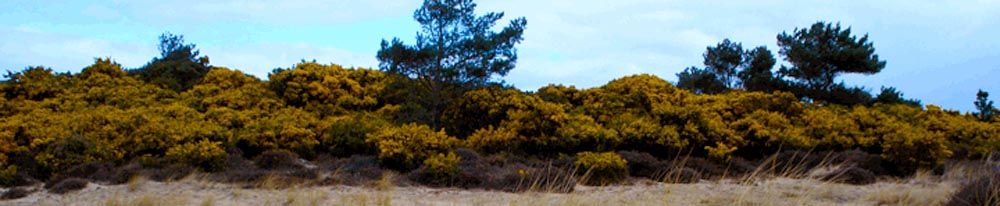
It starts with two major disasters back in 2004 that led to fundamental and ultimately positive changes: a huge gorse fire resulted in the Findhorn Hinterland Group, the precursor of the Findhorn Hinterland Trust (FHT), being set up after a public meeting in Findhorn Village, where plans to plant trees on the burnt area were discussed; and a violent storm created a large area of windblown trees in the middle of Wilkies Wood, which ultimately transformed into the first community-led burial site in Scotland.
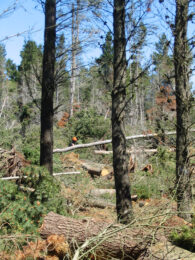
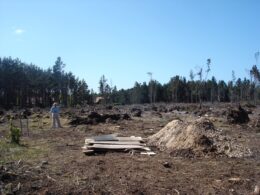
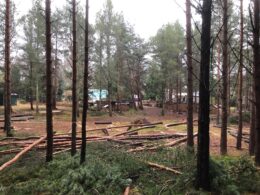
Summer 2005 Storm devastation starts to be cleared – a huge community effort.
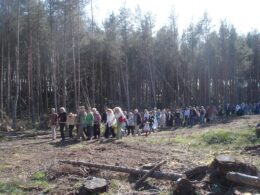
April 2007 First green burial in Wilkies Wood happens before full planning permission for the green burial site – Katherine Inglis.
2008 Two important documents are produced: the first five-year management plan drawn up for Duneland, the landowner, and the neighbouring charity Findhorn Dunes Trust has a lichen survey report produced.
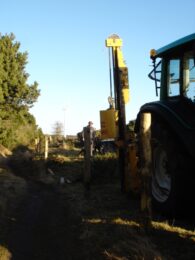
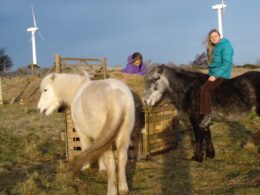
2009/10 First grant funding: Pony fencing costs from Scottish Community Fund.
2010 Will Russell takes on the Funeral Coordinator role.
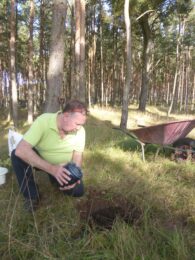
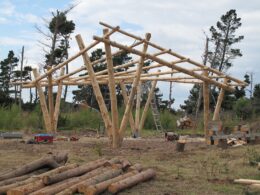
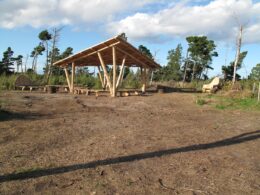
2011/12 Woodland Shelter built, website set up and stump clearance of burial site possible through a Forestry for People grant.
2012 First Local Biodiversity Action Plan produced.
2012/13 First firebreaks put in using the Moray Council gorse basher.
2014 SEPA investigates the radioactivity from dismantled WW2 plane parts up by the wind turbines.
Nov 2014 Duneland sells Wilkies Wood land to the Findhorn Foundation.
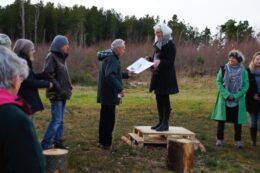
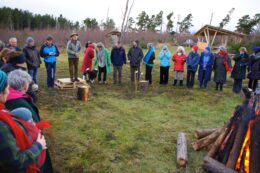
2014/15 Woodland Garden started.
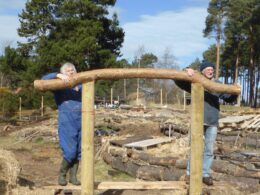
July 2015 Findhorn Hinterland Group, the unincorporated community group, becomes a charity: Findhorn Hinterland Trust SCIO (Scottish Charitable Incorporated Organisation).
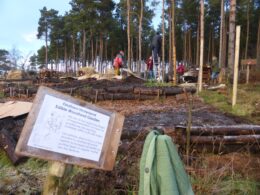
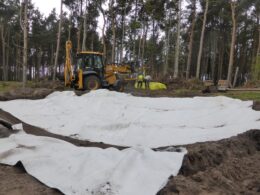
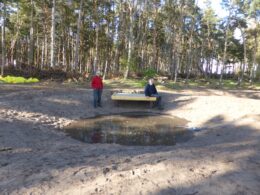
2015/16 Wildlife ponds created, public consultation happens including the first Woodland Festival.
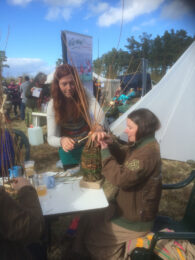
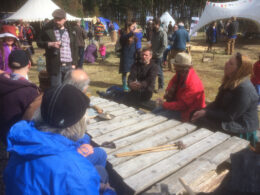
April 2016 FHT becomes the burial authority for the Wilkies Wood Green Burial Site.
2016/17 FHT hosts the Community Woodland Association’s annual conference.
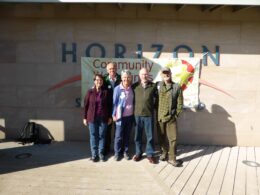
Nov 2017 Joint land owner meeting – the decision is taken to not jointly manage the dunes.
2018/19 First camp pads created, Kajedo Wanderer seconded from the Findhorn Foundation as FHT Land Manager, second Woodland Festival happens as part of Parkfest.
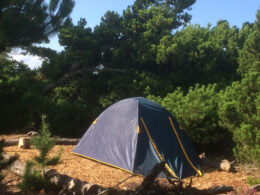
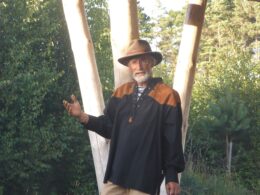
May 2018 Purchase of the Green Burial site from the Findhorn Foundation.
2018/19 Outdoor Learning Space starts to be built, the new apiary site is established by the wind turbines and tree planting by Lyle’s Wood for the 56th Findhorn Community birthday.
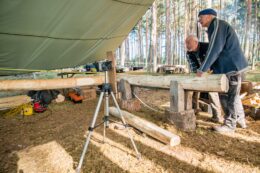
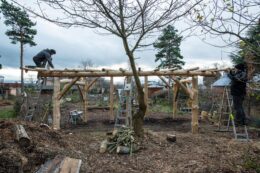
2019/20 Specialist biodiversity surveys started by Alan Watson Featherstone and restructuring of Wilkies Woodland starts.
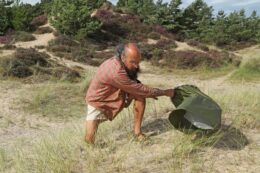
2020/21 Covid restrictions limit what can be done but newsletter is resurrected, paid membership of FHT started and Kajedo Wanderer is finally employed directly by FHT as Land Manager.
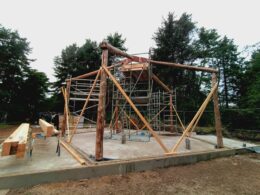
2021/22 Conservation Hub started and completed in February 2022.
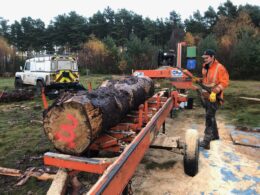
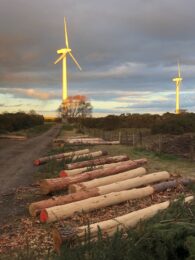
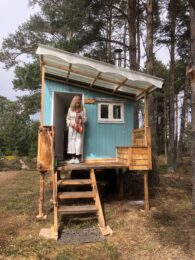
Storm Arwen provides timber for the new sanctuary, new compost toilet and our pony hay barn. Shepherds Hut build started, Trybooking began to be used for booking educational activities, the green burial team was restructured so there are now four paid team members instead of Will; and Draeyk van der Horn becomes the coordinator of the Woodland Garden.
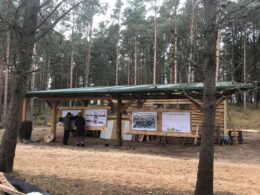
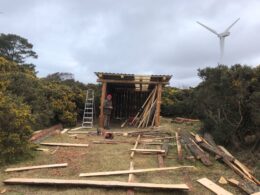
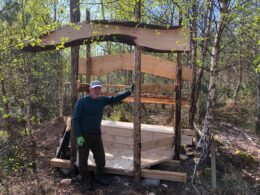
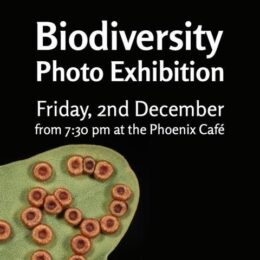
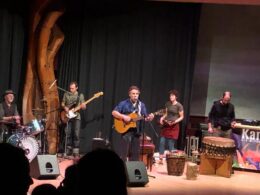
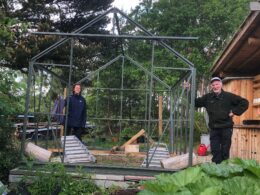
2022/23 Practical biology field trips with Forres Academy pupils start, corporate event with Chivas Regal, Alan Watson Feathersonte puts on a FHT photo exhibition in the Hall, there is a woodland orchestra fundraiser, a new greenhouse is donated and installed in the Woodland Garden and the Shepherd’s Hut is completed.
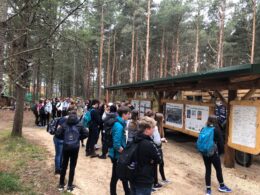
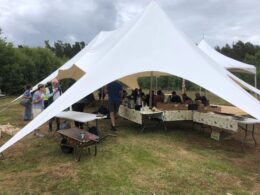
2024/25 Beloved community member Duerten Lau is buried in the green burial site, which by the end of this period has about 50 lairs in use and another 90 reserved. A major step forward in FHT dune restoration work is the creation of 0.8ha of open dune. Visits to MOD, Forres Rotary Club and Findhorn and Kinloss Community Council to raise awareness of conservation activities. Partnership with Forres Academy more formalised, with over 140 pupils involved in educational activities this year.
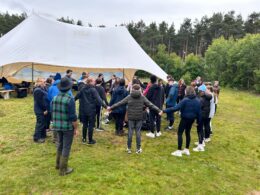
2024/25 Theatre of the Seven Directions presents eco theatre performances using the land as a setting. Restructuring the organisation to make it more sustainable and resilient is undertaken with Just Enterprise consultants.
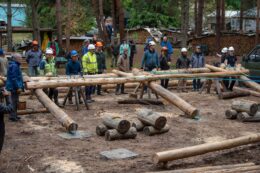
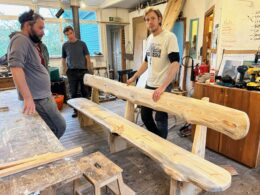
FHT plays a key role in the building of the new Light of Findhorn Sanctuary, supplying wood from the land and creating benches for the vestibule.
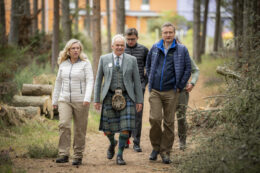
FHT is awarded Nature30 status on the 20th August 2025 with this major national conservation initiative being launched from here by the Cabinet Secretary for Climate Change and Energy and the CEO of NatureScot.
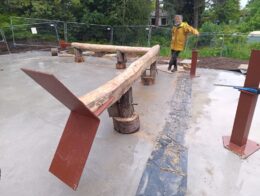
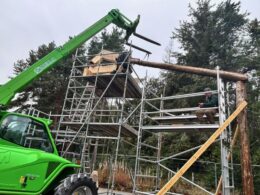
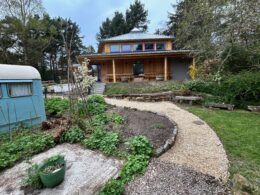
Above are a few highlights on our journey. What you do not see is the care, concern and hard work of a band of relatively few that have supported so much of the work so far. They have helped and inspired so many more to get involved in caring for the land, planting trees, keeping the gorse in check, keeping paths open, offering workshops and retreats, welcoming people of all ages, maintaining the structures, taking photographs, planning and putting on festivals, raising money, attending meetings, designing posters and articles, keeping people safe, looking after tools and the other thousand and one ways that we interact with the land, its creatures and each other as we give back to an area which is much loved and has given so much pleasure in so many ways to the many. A huge thank you to the land itself and to all the many hundreds of people that have been involved in so many different ways.
I have personally had fun, learnt a lot and given what I can to something I believe in and think is important. I hope you have too if you have been part of this adventure and this whole exercise makes me wonder who will carry the batten and get involved over the next 20 years?
Jonathan Caddy, FHT Trustee
November 2025
For a more detailed but still incomplete history of the work of FHG and FHT, do have a look at the following link. More will be added as time allows.
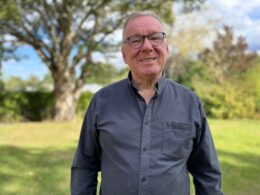 The Chair has now been filled by me, Colin Shreenan
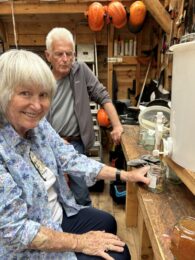 Early during this quarter the Conservation Hub was a hive of activity as the present bee team, made up of Martin Harker, John Willoner, Mathijis Mulder-Barge and Jonathan Caddy, aided by a number of previous participants from the three bee workshops carried out over the summer, came together to carry out the
 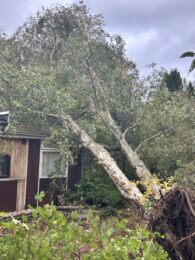 Storm Amy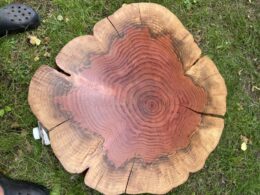
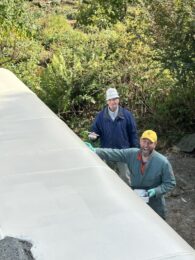 Contributions by FHT to help build the new sanctuary at the Park were mainly completed in the spring but there have been a few additions that happened in September. The
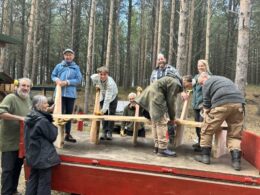 Another part of the redwood was imaginatively used to create the Peace Bench now in the grounds of the sanctuary, which was the work of the enthusiastic participants of the
 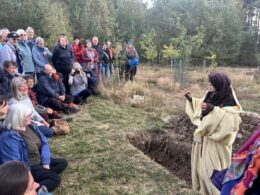 Another partnership that is developing well is with Laura Pasetti and her charity, the
 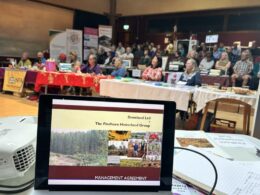 Jonathan Caddy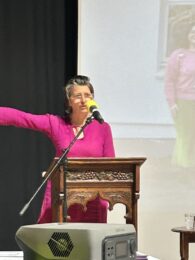
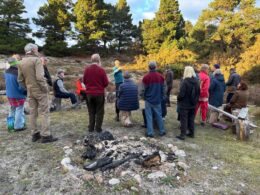 Another event was a
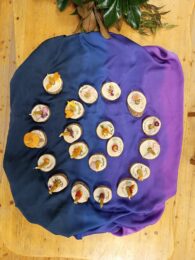 Sharing Games in Nature
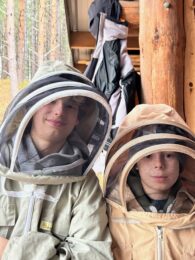 Beekeeping Workshop
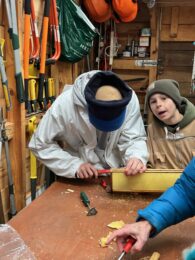 Then, we went to the woodland shelter where we learnt to repair and build bee frames. We really enjoyed it, actually we could not stop. The only thing that stopped us from working with our hands was the sound of the kettle and a delicious aroma….. a very good tea was ready for us with some delicious traditional biscuits and the marvelous Findhorn honey!
 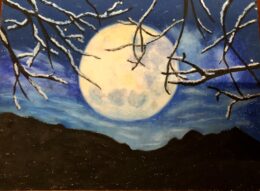 A poem for Findhorn
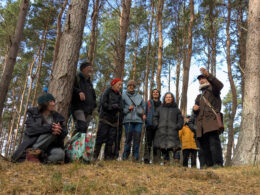
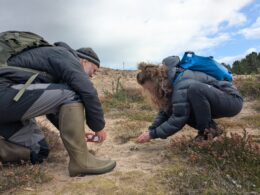
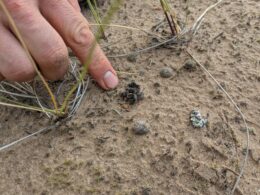
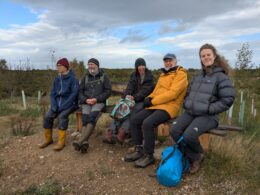
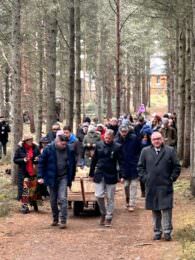
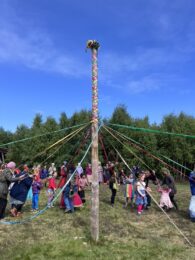 Over the past year Findhorn Hinterland Trust (FHT), as custodians of Wilkies Wood Green Burial Site, has been thoughtfully planning for the future of this cherished space. What began as a green burial ground has blossomed into something more profound – a place where our community gathers for festivals and celebrations, where children learn about our diverse natural environment, where ceremonies mark life’s most meaningful moments, and where loved ones return to the land they helped to preserve.
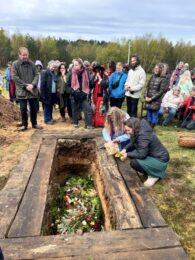
 We currently have 93 pre-purchased lairs, and we are deeply grateful for this support. These lair sales provide essential income that flows directly back into maintaining and protecting the land itself. However, we recognise that our burial space is not unlimited, and we are committed to managing this precious resource thoughtfully.
 Lair Purchase Price
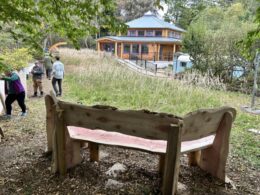 Ever since I watched the film ‘A United Kingdom’, I have dreamt of us having a Peace or Clearing Bench in our community – a place where two people who have maybe ‘lost sight’ of each other, can come together to (re)connect through clearing whatever it is that has led to their disconnection.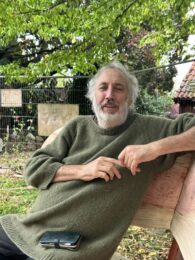
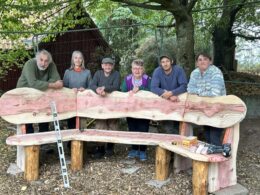 Maria Arper suggests that conflict is naturally present – obviously to a whole range of degrees – when two or more come together. Some we naturally mediate within and between ourselves as we go along. Some reach a stage where we have lost sight of each other to such an extent that we need (at least) a third party to find a way back to listening to and understanding each other. Somewhere in between on this continuum, is a place where we need to clear some disagreement or upset which, without attention, could end up as further disconnection.
 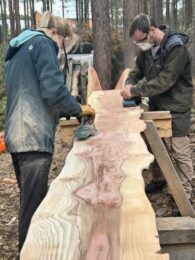 I think the bench is quite beautiful. The wood comes from the Redwood tree that had to be cut down outside Cornelia and Sylvia’s home near the Universal Hall. It has a stunning grain and pink heartwood (yes, we learnt about the biology of trees as well over the weekend!), which looks even better now it has a protective layer of polish. And it’s also the teamwork with which we created it over the weekend (no single one of us could have done it by ourselves) that for me takes it even deeper.









Meet the team: Jonathan Caddy
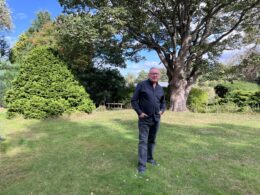
As son of two co-founders of the spiritual community here at Findhorn, Jonathan Caddy has spent most of his life roaming and exploring what we now call the Hinterland. As he steps down after 10 years as FHT Chair, he shares its beginnings and his vision for the future.
Also see Jonathan’s timeline of the Hinterland here.
Former FHT Chair Jonathan Caddy with Cabinet Secretary for Climate Change and Energy, Gillian Martin
Where did your love for this land begin?
My family and our friend Dorothy MacLean arrived here on 17th November 1962 when I was six years old. For seven years we all lived in the caravan I was born in, which is still on the same site, and out of which the famous Findhorn Garden was born, as well as the amazing community that has just turned 63 years old. We had little money so as boys we spent time exploring our environment, watching what went on and making things together out of found materials from the Bay, the barley fields next door on the Bichan Farm and especially in the dunes with their newly planted woods, now called Wilkies Wood. They were particularly appealing to explore as there was a big sign at the entrance saying, ‘Private Property Keep Out’. What an invitation for young boys! I was very shy and lacked confidence then as I had terribly squint eyes, but I took note of all around me in the natural world and that’s where my great love for this land stems from. I knew where all the birds nests were, where animals had their homes and I was out in all seasons – feral, connected, happy and much of the time in shorts and bare feet.
You’ve been involved since before there even was a Hinterland Trust – how did it all start?
Back in 2004-2005 we had two seeming disasters one after the other. The first was a huge fire that burnt gorse near the village – a helicopter was needed to take water from the bay to put out the flames. I was a board member of Duneland at the time, and we thought this would be a great opportunity to plant some trees. Current trustee Hugh Andrews drew up a planting plan for the dunes, which in the end we didn’t do. But we did have a public meeting – I expected about a dozen people, and instead it was a full house with well over 100-150 people who wanted to get involved. That’s how the Findhorn Hinterland Group, the precursor to the Trust, began. It included people from Findhorn village and from here at the Park. We wanted to have more say on what happened on the land.
The other disaster at about the same time was a huge storm that blew down the middle of Wilkies Wood and another couple of compartments. It was an absolute jumble and turmoil of felled trees, most of them by the wind. We made it a win-win-win situation: we cleared the land as a community, with many volunteers. The wood supplied the local community, which brought in some money. We left the middle of Wilkies Wood bare, and it became our green burial ground. The rest we planted to become the new wood in the middle of Wilkies Wood. We’d never have done that if there hadn’t been the storm. The green burial ground has been a mainstay of income for theFHT. These were the early beginnings; it wasn’t until July 2015 that we actually became a charity and the Findhorn Hinterland Trust.
Jonathan Caddy receives a certificate as he steps down as FHT Chair
You’re stepping down as chair after 10 years. Have you done what you set out to do?
At the time of that public meeting down in Findhorn village, we didn’t have a clear vision other than getting people involved with the land. We’ve certainly achieved that! We’ve learnt from the land, and done a lot more than I thought we might, by being open to opportunities and letting one thing develop from another. What we’ve done over this time has been pretty amazing.
Which of these achievements with FHT make you most proud?
The most recent and unexpected was becoming one of the country’s first to receive official recognition as a Nature30 site. This is a global movement to ensure that by 2030 at least 30% of the planet is effectively protected or conserved for nature. This important conservation initiative was launched nationally here by the Cabinet Secretary for Climate Change and Energy on 20 August. That’s an accolade for 20 years of work on the land – national recognition for what we’re doing here.
I’m also proud that we set up the green burial site. People in Moray appreciate having this option – it’s the first community-based green burial in Scotland. It provides income for the FHT – about a third our funds come through green burial activities – and the land has been restored as native broad leaf woodland, not just pine, so it’s more diverse in species and age. It’s also a space for people to meet and celebrate. We built the woodland shelter there too, and it brings people together, fulfilling one of our objectives, which is to build local community. So I’m really proud of that.
The third thing I’m proud of is the sense of team that’s been created. These are people who are invested in caring for this land, putting in their time and energy to volunteer. Some people get paid and I’m proud we’ve been able to fund that as well. That wonderful sense of team – I feel that’s an achievement.
What have been pivotal moments in your life with FHT?
There was a time when we were looking to work with other landowners in the local area, particularly the Findhorn Village Conservation Company, Findhorn Dunes Trust, and Duneland. We were aiming for integrated land management, because creatures don’t know the man-made boundaries we’ve created, so it really needs to be managed in an integrated way. We proposed this and had Chris Piper, a local forester, draw up a management plan we felt was really, really good.
We had a meeting and realised that actually other organisations didn’t want to do things in an integrated way. That was really disappointing for me, because one of the reasons for setting up the Findhorn Hinterland Group and then the Trust was to bring communities together. I’ve lived here for over 63 years now and there’s always been this sense of division. I thought that working the land together could bring people closer, but it didn’t seem so. That was pivotal for FHT. We had to realise that, okay, we’ve been offered land to manage, and we will put our time, energy, money and resources into that and do it really well. And that’s what we have done.
How would you like to see FHT grow and develop in the future?
Over the last three years, leading to me stepping down from being chair, we’ve been looking at the organisation’s sustainability and resilience. I’d like to see that developed even more, making it possible for people to come into positions, have some fun and give of their skills, and then leave those roles for other people – truly sustainable succession planning. Managing this land is not about what happens in my lifetime or the next 40 or 50 years, but rather the next hundred years and more. That’s what’s needed when we’re talking about land and ecosystems – and the green burial ground, where we’re legally committed to looking after the land for 100 years after the last burial.
Part of developing that resilience is through more partnerships in the local area. We already work with young people through the Forres Academy, with the Forestry School in Inverness, and with the Community Woodland Association. We also partner with Findhorn Bay Holiday Park and other organisations doing good work on the land. I would like to see those partnerships developed into the future.
Jonathan Caddy, beekeeper and former chair of FHT
If you could fast-forward a decade, what do you hope to see, looking around on the actual land, as well as with the Trust in 2035?
An interesting question! I would like to see the things we have put in place right now being well used and looked after. I’d like to see the Conservation Hub coming into its own even more as the centre of operations here, and the Woodland Garden flourishing. I hope more woodland restructuring has taken place, with younger trees coming up and more diversity of species and of ages.
I’d like to see this being a demonstration centre that’s nationally recognised for conservation work, particularly the dune restoration project, and that the succession of creatures has started to happen on the bare sand. We’d be attracting PHD and university students to do further research on the species we have here, particularly the rare species.
I’d like more partnerships with the local community, having more pupils come from secondary and primary schools to see conservation in action, and how we practically work with the land in a positive way to contribute to worldwide biodiversity.
I want to see the work we do on the land being integrated into the ecovillage’s education programmes, and that FHT’s own education programmes are really thriving, attracting young people, and able to offer proper funded apprenticeships.
In terms of the trustees and the team, I’d like to see them enjoying what they do and being part of a thriving ecovillage, nationally recognised for the good work it does.
Also see Jonathan’s timeline of the Hinterland here.