As son of two co-founders of the spiritual community here at Findhorn, Jonathan Caddy has spent most of his life roaming and exploring what we now call the Hinterland. As he steps down after 10 years as FHT Chair, he shares its beginnings and his vision for the future.
Also see Jonathan’s timeline of the Hinterland here.
Where did your love for this land begin?
My family and our friend Dorothy MacLean arrived here on 17th November 1962 when I was six years old. For seven years we all lived in the caravan I was born in, which is still on the same site, and out of which the famous Findhorn Garden was born, as well as the amazing community that has just turned 63 years old. We had little money so as boys we spent time exploring our environment, watching what went on and making things together out of found materials from the Bay, the barley fields next door on the Bichan Farm and especially in the dunes with their newly planted woods, now called Wilkies Wood. They were particularly appealing to explore as there was a big sign at the entrance saying, ‘Private Property Keep Out’. What an invitation for young boys! I was very shy and lacked confidence then as I had terribly squint eyes, but I took note of all around me in the natural world and that’s where my great love for this land stems from. I knew where all the birds nests were, where animals had their homes and I was out in all seasons – feral, connected, happy and much of the time in shorts and bare feet.
You’ve been involved since before there even was a Hinterland Trust – how did it all start?
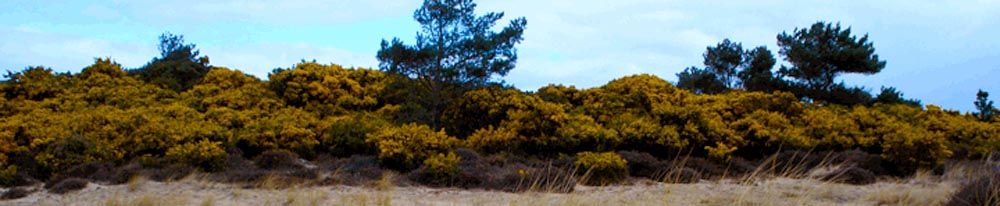
Back in 2004-2005 we had two seeming disasters one after the other. The first was a huge fire that burnt gorse near the village – a helicopter was needed to take water from the bay to put out the flames. I was a board member of Duneland at the time, and we thought this would be a great opportunity to plant some trees. Current trustee Hugh Andrews drew up a planting plan for the dunes, which in the end we didn’t do. But we did have a public meeting – I expected about a dozen people, and instead it was a full house with well over 100-150 people who wanted to get involved. That’s how the Findhorn Hinterland Group, the precursor to the Trust, began. It included people from Findhorn village and from here at the Park. We wanted to have more say on what happened on the land.
The other disaster at about the same time was a huge storm that blew down the middle of Wilkies Wood and another couple of compartments. It was an absolute jumble and turmoil of felled trees, most of them by the wind. We made it a win-win-win situation: we cleared the land as a community, with many volunteers. The wood supplied the local community, which brought in some money. We left the middle of Wilkies Wood bare, and it became our green burial ground. The rest we planted to become the new wood in the middle of Wilkies Wood. We’d never have done that if there hadn’t been the storm. The green burial ground has been a mainstay of income for theFHT. These were the early beginnings; it wasn’t until July 2015 that we actually became a charity and the Findhorn Hinterland Trust.
You’re stepping down as chair after 10 years. Have you done what you set out to do?
At the time of that public meeting down in Findhorn village, we didn’t have a clear vision other than getting people involved with the land. We’ve certainly achieved that! We’ve learnt from the land, and done a lot more than I thought we might, by being open to opportunities and letting one thing develop from another. What we’ve done over this time has been pretty amazing.
Which of these achievements with FHT make you most proud?
The most recent and unexpected was becoming one of the country’s first to receive official recognition as a Nature30 site. This is a global movement to ensure that by 2030 at least 30% of the planet is effectively protected or conserved for nature. This important conservation initiative was launched nationally here by the Cabinet Secretary for Climate Change and Energy on 20 August. That’s an accolade for 20 years of work on the land – national recognition for what we’re doing here.
I’m also proud that we set up the green burial site. People in Moray appreciate having this option – it’s the first community-based green burial in Scotland. It provides income for the FHT – about a third our funds come through green burial activities – and the land has been restored as native broad leaf woodland, not just pine, so it’s more diverse in species and age. It’s also a space for people to meet and celebrate. We built the woodland shelter there too, and it brings people together, fulfilling one of our objectives, which is to build local community. So I’m really proud of that.
It all came out of my mother wanting to have a green burial, but she couldn’t because we’d already planted a couple of bodies in the land, and the requirement from the local authority is that you need planning permission if you wanted to do any more.
The third thing I’m proud of is the sense of team that’s been created. These are people who are invested in caring for this land, putting in their time and energy to volunteer. Some people get paid and I’m proud we’ve been able to fund that as well. That wonderful sense of team – I feel that’s an achievement.
What have been pivotal moments in your life with FHT?
There was a time when we were looking to work with other landowners in the local area, particularly the Findhorn Village Conservation Company, Findhorn Dunes Trust, and Duneland. We were aiming for integrated land management, because creatures don’t know the man-made boundaries we’ve created, so it really needs to be managed in an integrated way. We proposed this and had Chris Piper, a local forester, draw up a management plan we felt was really, really good.
We had a meeting and realised that actually other organisations didn’t want to do things in an integrated way. That was really disappointing for me, because one of the reasons for setting up the Findhorn Hinterland Group and then the Trust was to bring communities together. I’ve lived here for over 63 years now and there’s always been this sense of division. I thought that working the land together could bring people closer, but it didn’t seem so. That was pivotal for FHT. We had to realise that, okay, we’ve been offered land to manage, and we will put our time, energy, money and resources into that and do it really well. And that’s what we have done.
I guess another pivotal moment is right now – with the transfer of assets in the community! FHT is doing a great job, managing land for conservation, for environmental education, for building local community and providing recreation resources. Up to now we’ve done that through management agreements – we haven’t owned any land. With the Findhorn Foundation Trust and Duneland Limited winding up in the near future, we’re being offered ownership of the land we’ve been managing. That’s a huge step forward for us as we become owners of what we’ve been looking after.
How would you like to see FHT grow and develop in the future?
Over the last three years, leading to me stepping down from being chair, we’ve been looking at the organisation’s sustainability and resilience. I’d like to see that developed even more, making it possible for people to come into positions, have some fun and give of their skills, and then leave those roles for other people – truly sustainable succession planning. Managing this land is not about what happens in my lifetime or the next 40 or 50 years, but rather the next hundred years and more. That’s what’s needed when we’re talking about land and ecosystems – and the green burial ground, where we’re legally committed to looking after the land for 100 years after the last burial.
Part of developing that resilience is through more partnerships in the local area. We already work with young people through the Forres Academy, with the Forestry School in Inverness, and with the Community Woodland Association. We also partner with Findhorn Bay Holiday Park and other organisations doing good work on the land. I would like to see those partnerships developed into the future.
If you could fast-forward a decade, what do you hope to see, looking around on the actual land, as well as with the Trust in 2035?
An interesting question! I would like to see the things we have put in place right now being well used and looked after. I’d like to see the Conservation Hub coming into its own even more as the centre of operations here, and the Woodland Garden flourishing. I hope more woodland restructuring has taken place, with younger trees coming up and more diversity of species and of ages.
I’d like to see this being a demonstration centre that’s nationally recognised for conservation work, particularly the dune restoration project, and that the succession of creatures has started to happen on the bare sand. We’d be attracting PHD and university students to do further research on the species we have here, particularly the rare species.
I’d like more partnerships with the local community, having more pupils come from secondary and primary schools to see conservation in action, and how we practically work with the land in a positive way to contribute to worldwide biodiversity.
I want to see the work we do on the land being integrated into the ecovillage’s education programmes, and that FHT’s own education programmes are really thriving, attracting young people, and able to offer proper funded apprenticeships.
In terms of the trustees and the team, I’d like to see them enjoying what they do and being part of a thriving ecovillage, nationally recognised for the good work it does.
Also see Jonathan’s timeline of the Hinterland here.
Meet the team: Jonathan Caddy
As son of two co-founders of the spiritual community here at Findhorn, Jonathan Caddy has spent most of his life roaming and exploring what we now call the Hinterland. As he steps down after 10 years as FHT Chair, he shares its beginnings and his vision for the future.
Also see Jonathan’s timeline of the Hinterland here.
Where did your love for this land begin?
My family and our friend Dorothy MacLean arrived here on 17th November 1962 when I was six years old. For seven years we all lived in the caravan I was born in, which is still on the same site, and out of which the famous Findhorn Garden was born, as well as the amazing community that has just turned 63 years old. We had little money so as boys we spent time exploring our environment, watching what went on and making things together out of found materials from the Bay, the barley fields next door on the Bichan Farm and especially in the dunes with their newly planted woods, now called Wilkies Wood. They were particularly appealing to explore as there was a big sign at the entrance saying, ‘Private Property Keep Out’. What an invitation for young boys! I was very shy and lacked confidence then as I had terribly squint eyes, but I took note of all around me in the natural world and that’s where my great love for this land stems from. I knew where all the birds nests were, where animals had their homes and I was out in all seasons – feral, connected, happy and much of the time in shorts and bare feet.
You’ve been involved since before there even was a Hinterland Trust – how did it all start?
Back in 2004-2005 we had two seeming disasters one after the other. The first was a huge fire that burnt gorse near the village – a helicopter was needed to take water from the bay to put out the flames. I was a board member of Duneland at the time, and we thought this would be a great opportunity to plant some trees. Current trustee Hugh Andrews drew up a planting plan for the dunes, which in the end we didn’t do. But we did have a public meeting – I expected about a dozen people, and instead it was a full house with well over 100-150 people who wanted to get involved. That’s how the Findhorn Hinterland Group, the precursor to the Trust, began. It included people from Findhorn village and from here at the Park. We wanted to have more say on what happened on the land.
The other disaster at about the same time was a huge storm that blew down the middle of Wilkies Wood and another couple of compartments. It was an absolute jumble and turmoil of felled trees, most of them by the wind. We made it a win-win-win situation: we cleared the land as a community, with many volunteers. The wood supplied the local community, which brought in some money. We left the middle of Wilkies Wood bare, and it became our green burial ground. The rest we planted to become the new wood in the middle of Wilkies Wood. We’d never have done that if there hadn’t been the storm. The green burial ground has been a mainstay of income for theFHT. These were the early beginnings; it wasn’t until July 2015 that we actually became a charity and the Findhorn Hinterland Trust.
You’re stepping down as chair after 10 years. Have you done what you set out to do?
At the time of that public meeting down in Findhorn village, we didn’t have a clear vision other than getting people involved with the land. We’ve certainly achieved that! We’ve learnt from the land, and done a lot more than I thought we might, by being open to opportunities and letting one thing develop from another. What we’ve done over this time has been pretty amazing.
Which of these achievements with FHT make you most proud?
The most recent and unexpected was becoming one of the country’s first to receive official recognition as a Nature30 site. This is a global movement to ensure that by 2030 at least 30% of the planet is effectively protected or conserved for nature. This important conservation initiative was launched nationally here by the Cabinet Secretary for Climate Change and Energy on 20 August. That’s an accolade for 20 years of work on the land – national recognition for what we’re doing here.
I’m also proud that we set up the green burial site. People in Moray appreciate having this option – it’s the first community-based green burial in Scotland. It provides income for the FHT – about a third our funds come through green burial activities – and the land has been restored as native broad leaf woodland, not just pine, so it’s more diverse in species and age. It’s also a space for people to meet and celebrate. We built the woodland shelter there too, and it brings people together, fulfilling one of our objectives, which is to build local community. So I’m really proud of that.
It all came out of my mother wanting to have a green burial, but she couldn’t because we’d already planted a couple of bodies in the land, and the requirement from the local authority is that you need planning permission if you wanted to do any more.
The third thing I’m proud of is the sense of team that’s been created. These are people who are invested in caring for this land, putting in their time and energy to volunteer. Some people get paid and I’m proud we’ve been able to fund that as well. That wonderful sense of team – I feel that’s an achievement.
What have been pivotal moments in your life with FHT?
There was a time when we were looking to work with other landowners in the local area, particularly the Findhorn Village Conservation Company, Findhorn Dunes Trust, and Duneland. We were aiming for integrated land management, because creatures don’t know the man-made boundaries we’ve created, so it really needs to be managed in an integrated way. We proposed this and had Chris Piper, a local forester, draw up a management plan we felt was really, really good.
We had a meeting and realised that actually other organisations didn’t want to do things in an integrated way. That was really disappointing for me, because one of the reasons for setting up the Findhorn Hinterland Group and then the Trust was to bring communities together. I’ve lived here for over 63 years now and there’s always been this sense of division. I thought that working the land together could bring people closer, but it didn’t seem so. That was pivotal for FHT. We had to realise that, okay, we’ve been offered land to manage, and we will put our time, energy, money and resources into that and do it really well. And that’s what we have done.
I guess another pivotal moment is right now – with the transfer of assets in the community! FHT is doing a great job, managing land for conservation, for environmental education, for building local community and providing recreation resources. Up to now we’ve done that through management agreements – we haven’t owned any land. With the Findhorn Foundation Trust and Duneland Limited winding up in the near future, we’re being offered ownership of the land we’ve been managing. That’s a huge step forward for us as we become owners of what we’ve been looking after.
How would you like to see FHT grow and develop in the future?
Over the last three years, leading to me stepping down from being chair, we’ve been looking at the organisation’s sustainability and resilience. I’d like to see that developed even more, making it possible for people to come into positions, have some fun and give of their skills, and then leave those roles for other people – truly sustainable succession planning. Managing this land is not about what happens in my lifetime or the next 40 or 50 years, but rather the next hundred years and more. That’s what’s needed when we’re talking about land and ecosystems – and the green burial ground, where we’re legally committed to looking after the land for 100 years after the last burial.
Part of developing that resilience is through more partnerships in the local area. We already work with young people through the Forres Academy, with the Forestry School in Inverness, and with the Community Woodland Association. We also partner with Findhorn Bay Holiday Park and other organisations doing good work on the land. I would like to see those partnerships developed into the future.
If you could fast-forward a decade, what do you hope to see, looking around on the actual land, as well as with the Trust in 2035?
An interesting question! I would like to see the things we have put in place right now being well used and looked after. I’d like to see the Conservation Hub coming into its own even more as the centre of operations here, and the Woodland Garden flourishing. I hope more woodland restructuring has taken place, with younger trees coming up and more diversity of species and of ages.
I’d like to see this being a demonstration centre that’s nationally recognised for conservation work, particularly the dune restoration project, and that the succession of creatures has started to happen on the bare sand. We’d be attracting PHD and university students to do further research on the species we have here, particularly the rare species.
I’d like more partnerships with the local community, having more pupils come from secondary and primary schools to see conservation in action, and how we practically work with the land in a positive way to contribute to worldwide biodiversity.
I want to see the work we do on the land being integrated into the ecovillage’s education programmes, and that FHT’s own education programmes are really thriving, attracting young people, and able to offer proper funded apprenticeships.
In terms of the trustees and the team, I’d like to see them enjoying what they do and being part of a thriving ecovillage, nationally recognised for the good work it does.
Also see Jonathan’s timeline of the Hinterland here.